

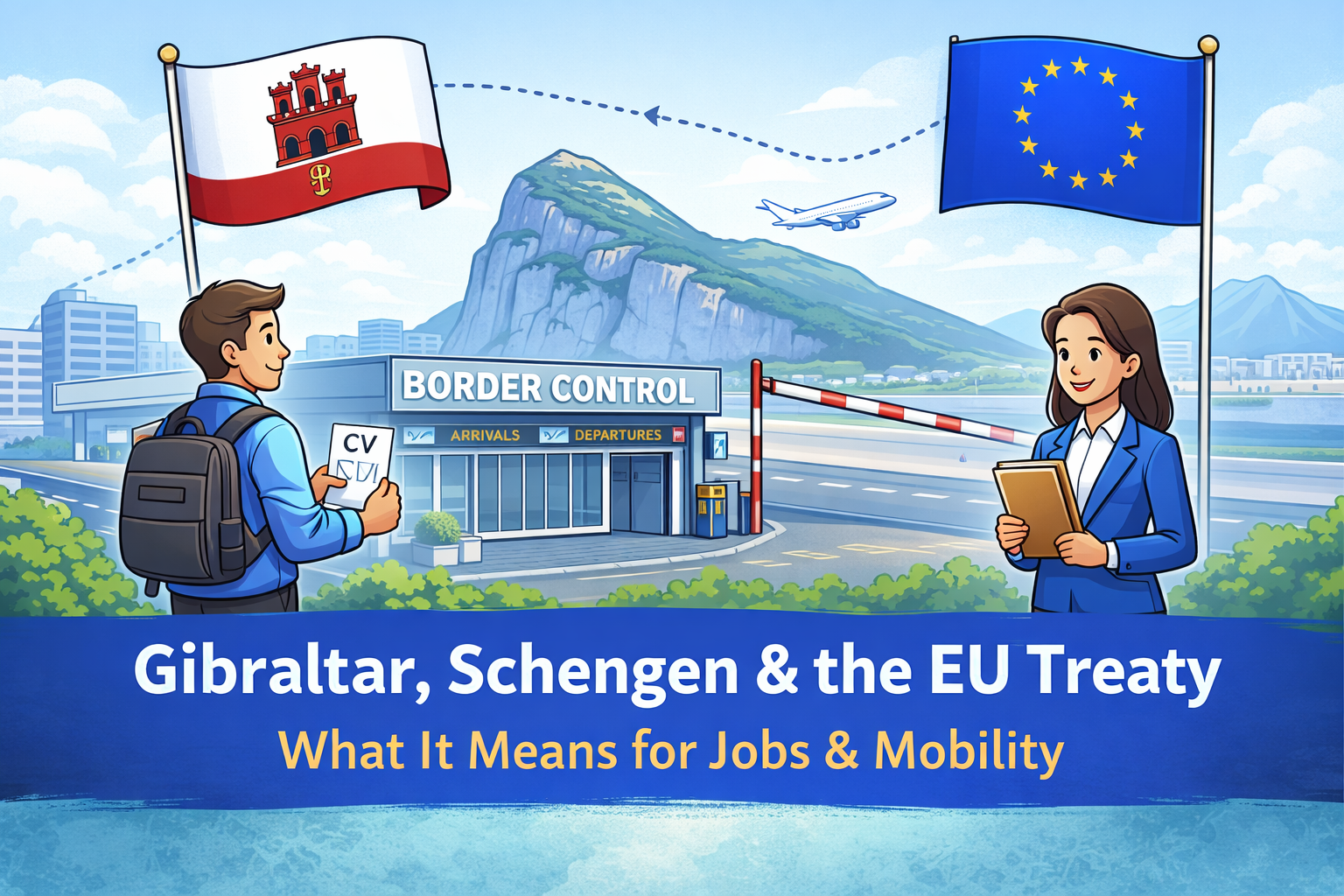
Gibraltar’s relationship with the European Union has been in transition since Brexit. But recent developments suggest a major shift is approaching - one that could significantly reshape how people live, work, and do business in Gibraltar.
According to a recent report by GBC News, 10 April is being targeted as a potential implementation date for the long-anticipated treaty governing Gibraltar’s future relationship with the EU and its association with the Schengen Area.
“The proposed treaty would remove the physical border at the frontier, integrate Gibraltar into the Schengen Area for movement purposes, and fundamentally change daily life for workers and businesses.”
While the treaty is still subject to final legal and political steps, its direction is clear: smoother movement of people and goods, simplified access through Gibraltar Airport, and a more integrated economic environment between Gibraltar and the surrounding region.
One of the most significant elements of the proposed agreement is the free movement of persons between Gibraltar and the Schengen Area. In practical terms, this would remove routine border checks at the land frontier.
For Gibraltar’s workforce, this is enormous. Thousands of workers currently commute daily from Spain, and delays at the border have long been a friction point for employers and employees alike.
For jobseekers, especially those considering relocation or cross-border work, this reduces uncertainty and makes Gibraltar a far more attractive place to build a career.
The treaty also addresses Gibraltar Airport - a longstanding point of contention. Under the proposed framework, passengers arriving at Gibraltar Airport would be able to enter the Schengen Area directly, with border controls handled under the new arrangements.
This opens the door to:
For professionals who travel frequently, or employers operating across multiple jurisdictions, improved air access makes Gibraltar far more competitive.
The agreement is also expected to improve the movement of goods, reducing administrative barriers and delays for imports and exports.
While Gibraltar’s economy is heavily services-based, smoother logistics benefit:
A more efficient flow of goods lowers operating costs and supports business growth - which ultimately translates into more jobs and greater hiring confidence.
Taken together, the treaty represents a structural upgrade to Gibraltar’s economic environment. Reduced friction at the border, improved travel access, and closer integration with Europe make Gibraltar more attractive to employers and professionals alike.
We are likely to see:
For candidates, this means more opportunities. For employers, it means access to a deeper and more flexible talent pool. And for Gibraltar as a whole, it reinforces its position as a competitive, outward-looking economy.
While final implementation details will matter, the direction of travel is clear - and it’s a positive one for anyone working in, hiring in, or moving to Gibraltar.
Browse the latest jobs in Gibraltar and prepare for a job market shaped by improved mobility, stronger connectivity, and growing employer confidence.
Hiring in Gibraltar? Visit GibraltarJobs.ai to post a vacancy and reach candidates ready for Gibraltar’s next phase.
© 2026 GibraltarJobs.ai